Office Clearance in Kensington

We provide office clearance in Kensington for businesses that need desks, chairs, cabinets, filing, electronics and mixed office contents removed in a tidy, organised way. The service is suited to routine clear-outs, end-of-lease changes, refurbishments and surplus furniture removal, with practical attention to access, sorting and safe handling. Where items need separating for reuse, recycling or disposal, we work methodically so the space can be returned to usable condition without unnecessary disruption.
Our work can cover a single room, a floor of offices or a larger commercial clear-down, depending on what needs moving. We can remove common workplace items such as storage units, meeting tables, monitors and small loose items, as well as bulkier furniture that needs careful lifting. If you are comparing options, the most useful starting point is usually the type and volume of items, the access to the building and whether the clearance needs to happen around staff, contractors or a handover deadline.
To request a quotation, send over a short description of the office space, the items to be cleared and any access notes. If you already know which pieces should stay and which should go, that helps us shape the work more accurately. You can also ask about timings and the scope of removal before confirming the booking, so the plan is clear from the start.
Clearance for desks, storage and workplace furniture
Office clearances often begin with the largest and most visible items: desks, pedestals, filing cabinets, shelving, boardroom tables and reception furniture. These pieces take up most of the space and usually determine the order in which the rest of the room can be emptied. A careful approach matters because bulky items can catch on walls, corners and door frames if they are moved without a plan. We therefore treat furniture removal as both a lifting task and a space-management task.
Where furniture is still usable, businesses sometimes want it moved out separately from general waste so it can be passed on, reused or assessed for a different site. Where pieces are worn, damaged or no longer required, we can include them in the same clearance. The aim is to leave you with an office that is easier to reconfigure, hand over or redevelop, without leaving a trail of awkward items behind. If you need a simple route to quote us, list the main furniture types first and add any special access details afterwards.
How furniture is assessed before removal
Some furniture clears in straightforward sections, while other items need more care because of fixings, weight or awkward dimensions. Filing cabinets may still contain paper, partitions may need separating, and modular furniture may need to be handled in pieces. We take a sensible approach to these practical details so the work remains safe and orderly. If you are choosing what to include, it is useful to separate large fixed items from loose office contents, then note anything that may need extra handling.
Workspace contents, paper and everyday office clutter

Office spaces rarely contain only furniture. There are usually shelves of archived files, boxed stationery, old display items, equipment casings, cables and mixed day-to-day clutter that has built up over time. Clearing these items well can take just as much planning as removing desks, because different materials need to be separated sensibly. We can help with the sort of clearance that turns a crowded workplace back into a workable room, with attention to the practical order in which contents come out.
Paper, card, light packaging and other recyclable office materials are often collected alongside the main clearance, while items that need a different route can be grouped separately. This is especially useful when a business wants to clear storerooms, back offices, cupboards or archive areas rather than a polished client-facing suite. Clarity about what is staying is important, especially when a space contains mixed items that look similar but serve different purposes. Two or three quick photographs can also help if the room is awkwardly arranged.
For a quotation, it is usually enough to share a short inventory, the number of rooms involved and any items that are especially heavy, fragile or fixed in place. We can then discuss the likely scope before anything is booked. If you are working to a date, mention that early so the removal can be planned around handover, refurbishment or relocation work. The more specific the outline, the easier it is to match the clearance to the space.
Electronics, office equipment and mixed materials
Modern office clearances often include screens, printers, computer accessories, office machines and other equipment that cannot simply be treated like ordinary rubbish. These items may need separating from furniture and from loose waste so they can be handled in the right way. We can include mixed office contents in the same clearance where appropriate, which is useful when a room contains both furniture and a spread of older devices or accessories that no longer need to remain on site.
Because office equipment comes in many shapes and sizes, it helps to identify which items are light enough to carry easily and which need a more careful route from the room to the vehicle. If equipment is boxed, stacked or built into a workstation, that can affect how the clearance is approached. We do not need a long explanation, but a few plain details save time and reduce uncertainty. When in doubt, describe the office as it is now rather than as it will be after you have started moving things.
There are also cases where business premises contain a mix of furniture, soft contents, display material and miscellaneous hardware. In those settings, the practical question is not simply what can be removed, but how it should be grouped during the clearance. A sensible separation of categories can make the process smoother and help avoid items being left behind by mistake. That is one reason why a compact written list is often more useful than a very broad description.
Planning access, building layout and clearance order

Office clearance work is often shaped by access rather than by the items alone. A ground-floor suite with direct loading access is very different from a top-floor office served by a shared corridor, a lift or limited parking. Narrow entrances, stairwells, security desks and timed building access can all influence the order in which items are taken out. We work around those practical constraints so the clearance remains organised rather than rushed.
If you are arranging a quotation, the most helpful details are the floor level, whether there is a lift, whether access requires advance notice and whether there are restrictions on vehicle stopping or loading. These points affect planning and should be shared early. A business often benefits from dividing the work into sections: furniture first, loose contents next, and smaller materials after that. That approach keeps the removal process efficient and easier to supervise.
- List the rooms or areas to be cleared.
- Note any stairs, lifts, tight corridors or loading restrictions.
- Separate items that must stay from items that can go.
- Mention fixed furniture, heavy equipment or awkwardly stacked contents.
End-of-lease, refurbishment and office move clearances
Commercial clearances are often linked to a lease ending, an internal reorganisation or a refurbishment programme. In those situations, the clearance needs to do more than remove loose items: it has to fit the wider sequence of works. Furniture may need to come out before decorating starts, or remaining items may need to be cleared once contractors have finished a room. Our office clearance service is designed to fit around those practical stages rather than forcing the business to work around the clearance.
For a move, the useful distinction is between what is staying for the new premises and what is surplus to requirement. In a refurbishment, the key question may be whether the room needs a full strip-out of contents or a more selective removal of dated items, storage and accumulated clutter. Where the scope is clear, the work can be planned more sensibly and unnecessary handling can be avoided. If you are comparing solutions, think about what the room needs to become, not only what is visible today.
A clear description of the final state can be more helpful than a long explanation of how the room got there. For example, it may be enough to say that the office must be emptied for decorating, that only certain cabinets remain, or that the boardroom is being reset with new furniture. Those simple points help define the task. If you want to move ahead, ask for a quotation and include the date you are working towards.
Sorting items for reuse, recycling and disposal
Not every office item needs the same route once it leaves the building. Some pieces may be suitable for reuse, some may be recyclable and others may need to be removed as general mixed office waste. The clearance process is therefore as much about sorting as it is about lifting. We can keep the flow of items organised so suitable materials are not mixed together unnecessarily, which is especially useful when a business wants the clearance handled in a responsible and straightforward way.
The point of sorting is not to make the process complicated; it is to keep the different streams clear enough that they can be dealt with appropriately. That may involve separating cardboard, paperwork, metal furniture, wooden pieces, plastics or small loose items. Even when the office contains a wide range of contents, a structured approach can reduce confusion and make the removal easier to manage. It also helps the quotation process, because a more defined scope usually leads to a more accurate estimate.
Some businesses prefer to keep the clearance brief and direct: remove the furniture, take away the leftovers and leave the room ready for the next stage. Others need a more detailed split between items that should be retained, relocated or removed. Either approach can be accommodated if the instructions are clear. The more the work is grouped sensibly at the start, the less likely it is that items will be left behind in cupboards, corners or side rooms.
About Kensington

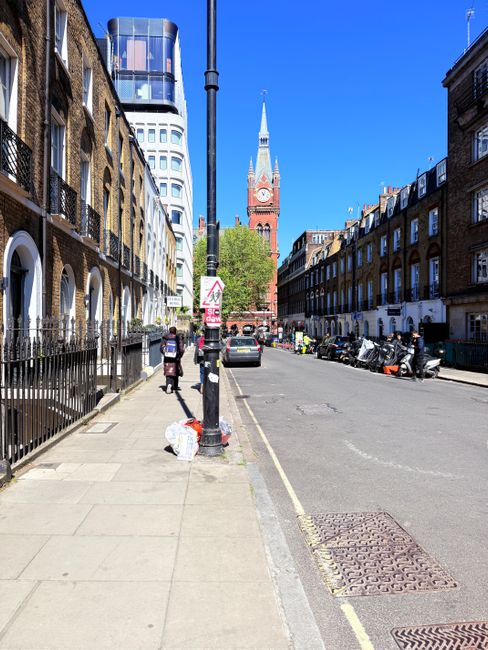
Kensington is a district in west London best known for its mix of ceremonial, residential and cultural landmarks, with streets that combine grand terraces, garden squares and a busy urban edge. The area forms part of the Royal Borough of Kensington and Chelsea, and its character has been shaped by centuries of development from village-like beginnings into a dense and varied part of the capital. Kensington High Street remains one of the area’s best-known routes, linking retail, transport and local movement across the district. To the north and west, Kensington Gardens and Hyde Park provide a major green setting, while the museums and institutions around Exhibition Road give the area an especially strong public and cultural identity. The Natural History Museum, the Science Museum and the Victoria and Albert Museum are among the most recognisable destinations nearby, each contributing to the district’s international reputation. Architectural variety is another defining feature: there are stucco-fronted terraces, mansion blocks, mansion houses and later commercial buildings, often standing close together in short walking distances. South Kensington, Earl’s Court and Notting Hill sit nearby, but Kensington itself has a distinct centre of gravity and a long-established place in London’s urban geography. Local streets such as Kensington Church Street and Kensington Church Walk reflect a scale that is more intimate than many central London districts, yet the area still connects easily to wider routes and rail and Underground services. As a whole, Kensington combines heritage, institutions, open space and dense city life in a way that makes it one of the capital’s most recognisable neighbourhoods.
Quoting office clearance work accurately
Pricing for office clearance is usually influenced by volume, access, the amount of lifting involved and how much sorting is needed on site. A small suite with simple access is different from a multi-room clearance with stairs, restricted loading or tightly packed storage. Other factors can include the mix of furniture and loose contents, whether the work needs to happen outside normal hours and whether the clearance includes awkward or heavy items. These are the main elements that shape a fair quotation.
It is useful to remember that a quotation is only as clear as the information supplied. A short list of furniture, any equipment that must be included, and the access conditions are usually enough to begin. If photographs are available, they can support the description, especially where rooms are crowded or have more than one area. Keep the explanation practical and specific rather than trying to summarise the whole office in one sentence. That usually leads to a better estimate and fewer surprises later.
When you are ready, send the details and ask for a quotation in plain terms. If the office is part of a larger relocation or refurbishment plan, mention that too so the scope can be set against the overall schedule. We can then look at the work in a structured way and help you decide how best to proceed. Get in touch when you have the outline ready.
What to include in your enquiry

A well-prepared enquiry does not need to be long. The most useful information is usually the type of office, the approximate amount of furniture and contents, and the access arrangement for the building. If there are items that need to stay on site, say so clearly. If the clearance must happen by a particular day, include that date. These details help set the work up properly and reduce the need for back-and-forth before a quotation can be prepared.
You can also mention any areas that are especially full, such as storage rooms, server cupboards, archive spaces or reception zones, because those sections often change the feel of the job. Where the office is being emptied for handover or redesign, it is helpful to note whether the aim is a full clearance or a selective removal. That distinction matters, since the scope can vary considerably even between offices of a similar size. Plain facts work better than broad descriptions.
If you would like to move forward, ask for a quotation and outline the office, the contents and the access conditions. We will use that information to assess the likely scope and plan the clearance sensibly. A concise enquiry is usually enough to start the process, and it gives you a straightforward way to compare the next step. A prompt reply starts with a clear description, so send the details when you are ready.