Health and Safety Policy — Office Clearance Kensington
 Office Clearance Kensington maintains a clear and accessible Health and Safety policy describing how waste removal, office clearance and rubbish management operations are carried out safely and legally. This policy sets out responsibilities for management, supervisors and operatives engaged in commercial and residential office clearance services. It applies to all staff, contractors and visitors working in the service area and provides a framework for risk assessment, safe systems of work and the safe handling of general waste and specialised rubbish. All tasks must be planned, supervised and documented.
The aims of this policy are to prevent injury and ill health, to ensure safe rubbish handling throughout the service area and to ensure that any operations under the banner of Kensington office clearance comply with recognised health and safety standards. Management will ensure resources are allocated to training, appropriate personal protective equipment (PPE) and equipment maintenance. The policy emphasises cooperation with external waste carriers and rubbish company service area requirements to reduce hazards during removal, transport and disposal of materials.
 Roles and responsibilities are defined clearly: senior management retains overall accountability for the health and safety of those involved in office clearance in Kensington, supervisors must ensure that site-level risk controls are implemented, and operatives must follow safe working procedures. Contractors and subcontractors engaged for junk removal or commercial clearance must demonstrate competency and adhere to this policy. Regular reporting and incident notification procedures will be maintained to monitor compliance and to respond promptly to any hazards.
Risk assessment, training and operational controls
Comprehensive risk assessments are a cornerstone of safe rubbish removal and office clearance services. Prior to any job, assessments will identify manual handling risks, asbestos or hazardous materials presence, trip and fall hazards, fire risks and vehicle movements. Controls include mechanical aids for lifting, segregation of recyclable and non-recyclable items, safe storage prior to removal, and the implementation of exclusion zones where heavy removal work or compaction is necessary. Routine toolbox talks and operational briefings will support awareness and task-specific precautions.
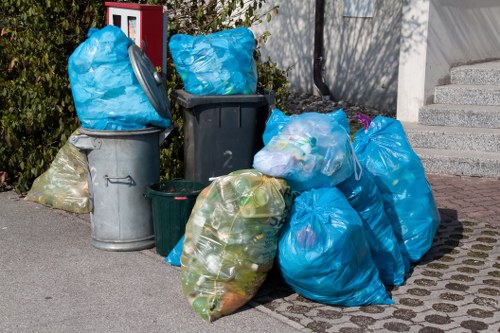 Training will be provided to all staff to ensure competence in manual handling, use of trolleys, sack barrows and lifting equipment, and the correct use of PPE such as gloves, hi-vis clothing and eye protection. Staff performing electrical or specialist removals receive additional instruction on isolating utilities and on safe decommissioning of office equipment. This training is refreshed periodically and recorded. The policy promotes an inclusive safety culture where workers are encouraged to report near misses and unsafe conditions without fear of reprisal.
Equipment and vehicle safety form part of operational controls. Regular maintenance schedules, pre-use checks and safe loading practices reduce the risk of mechanical failure and road incidents during rubbish collection and removal. Vehicles used for office clearance are loaded to safe limits and secured to prevent shifting. Drivers and crew must observe vehicle access rules at client sites and follow safe loading/unloading protocols to protect bystanders and staff.
Hazardous materials, emergency response and monitoring
Hazardous materials such as batteries, electronic waste, certain chemicals and sharps must be identified and segregated by trained personnel. Procedures for handling hazardous office waste are documented and ensure compliance with environmental and waste management standards. If unexpected hazardous materials are discovered, work will cease and specialised contractors engaged to manage safe removal. Records of hazardous waste consignments and disposal routes are maintained to support traceability and regulatory compliance within the rubbish company service area.
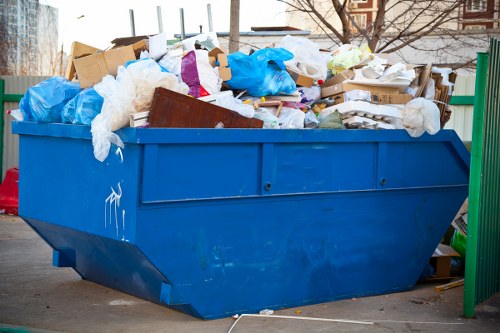 Emergency procedures include fire response, spill control, first aid provision and communication plans. First aid kits are available on-site and staff trained in first aid are rostered where required. Fire extinguishers and spill kits are located and maintained, and evacuation routes are clearly marked during clearance operations. Incidents are investigated to identify root causes and implement corrective measures to prevent recurrence. Regular audits and inspections provide ongoing assurance that safety standards are met.
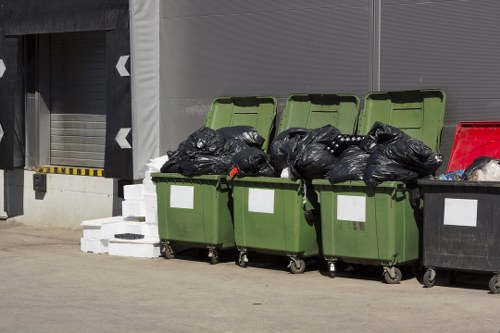 The policy will be reviewed at least annually or following significant changes to operations, equipment or incident occurrences. Continuous improvement is supported through performance monitoring, incident analysis and stakeholder feedback within operational teams. This Health and Safety policy for office clearance services seeks to protect people, property and the environment by embedding safe working practices across every stage of clearance, rubbish removal and commercial clearance activity. Adherence to these principles is mandatory for all personnel.
